
Manufacturing
Predicting recovery times based on millions of records
An international company wanted to predict recovery times based on historical repair data. We built ML models that outperformed human estimates, even with imperfect data.
Objective
Better recovery time estimates based on historical data
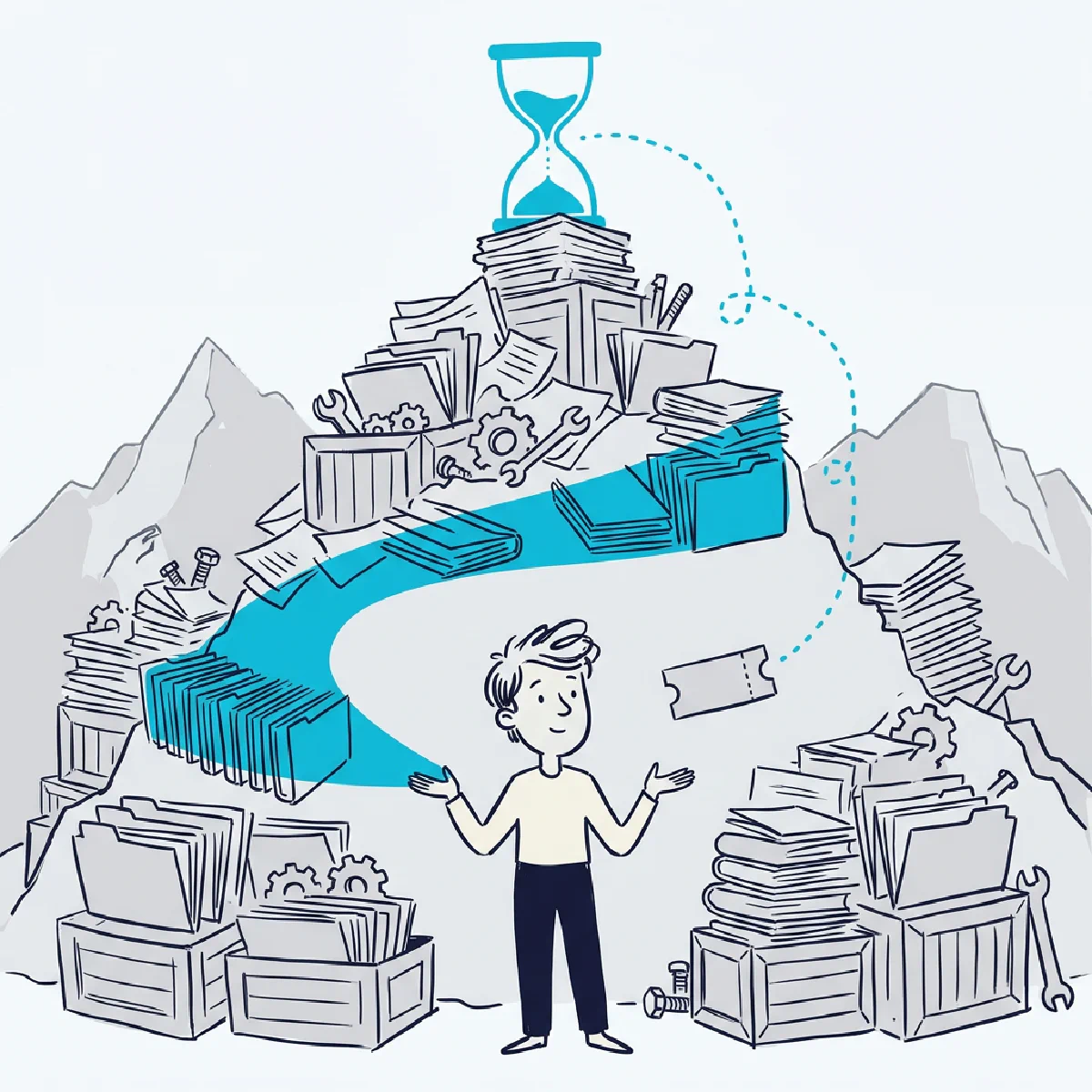
An international company received a request from their IT department: can we predict recovery times based on millions of historical repair records? Until then, estimates were made manually by employees. The question was whether AI could do it faster and more accurately.
Despite the large data volume, data quality was not optimal. Patterns were sparse and recovery times varied widely based on part type, repair complexity and supplier. Manual estimates were slow and inconsistent.
Our approach
Full preprocessing and model training pipeline
Data preprocessing
We ran a full preprocessing pipeline on the client's data. Millions of records cleaned, normalised and prepared for modelling. Data quality issues were identified and documented early so expectations were realistic.
Model training and evaluation
Multiple AI models were trained and compared. We tested different approaches to find the best balance between accuracy and generalisability. Despite the data quality challenges, the models found patterns that manual estimates missed.
Deployment preparation on Google Cloud
The solution was prepared for automated deployment on Google Cloud. The client's existing cloud infrastructure was used, which kept total cost of ownership manageable.
Collaboration with the Unpyle team
This project was tackled together with the Unpyle team. A colleague handled the more complex modelling, while we focused on preparing the automated deployment pipeline. Complex projects benefit from complementary expertise.
The result
AI predictions outperformed human estimates
The models produced more accurate predictions than manual estimates and found patterns in the data that were not visible to human reviewers. Despite the data quality challenges, the results beat the human baseline. The project showed that even imperfect data can produce valuable predictions when preprocessing and modelling are done well.
Ready to build your AI setup?
Let's discuss what an AI setup looks like for your sector.